


National sides
5 cent
Andorra
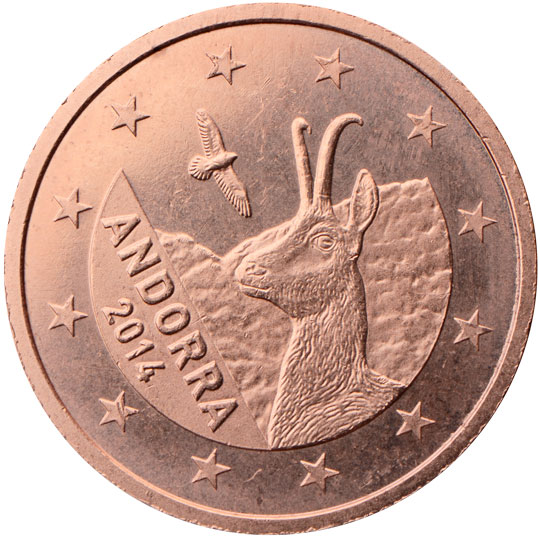
Andorra signed a Monetary Agreement with the European Union on 30 June 2011. As a result, Andorra can use the euro as its official currency and issue its own euro coins. All the coins feature the 12 stars of the European flag.
The 1, 2 and 5 cent coins show a Pyrenean chamois and a golden eagle.
Andorra
Austria
Austria chose to produce a series of coins illustrating flowers, architecture and famous people from its history. The designs were chosen by a national panel and public opinion poll. Austrian artist Josef Kaiser created the designs. This coin features alpine primroses, as part of a floral series, symbolising a duty to the environment and the part Austria is playing in the development of a Community environmental policy.
Austria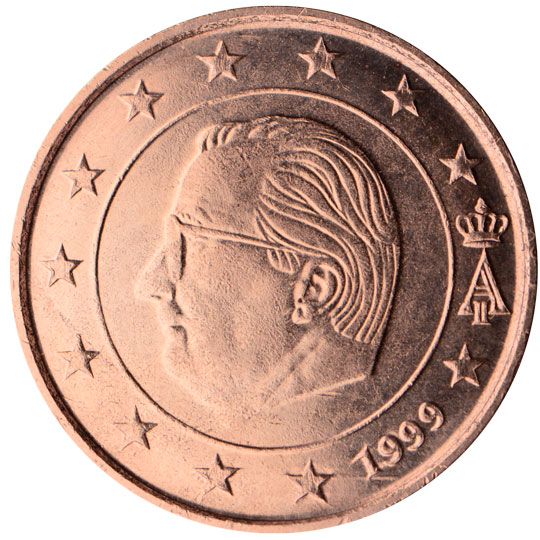
Belgium
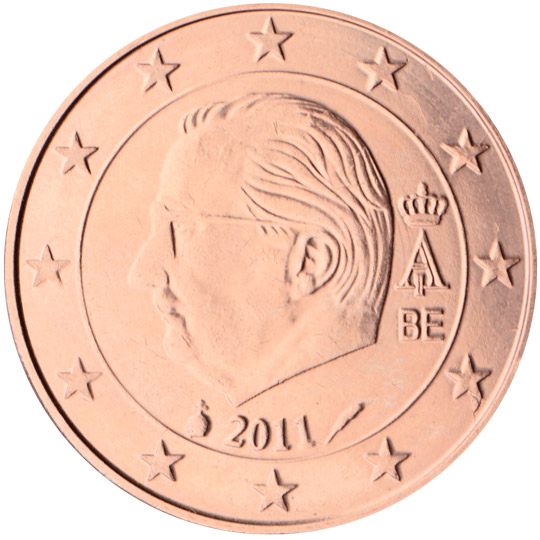
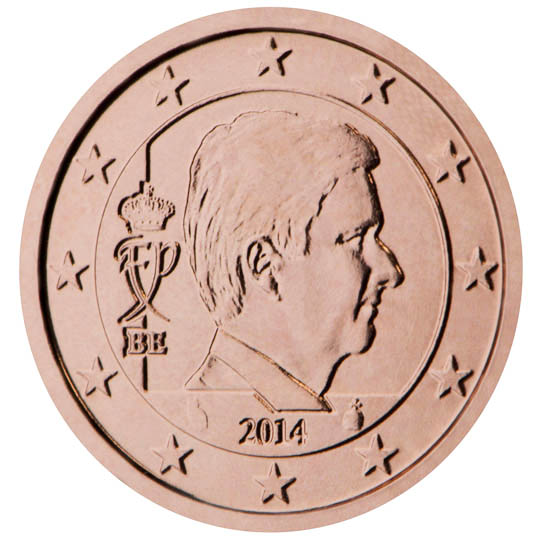
Belgium's euro coins were designed by Jan Alfons Keustermans, Director of the Municipal Academy of Fine Arts of Turnhout. There are three series of coins in circulation. All are valid.
The first series depicts King Albert II in the inner part of the coin, while the royal monogram - a capital "A" underneath a crown - among 12 stars, symbolising Europe, as well as the year of issuance appear in the outer part.
In 2008, Belgium slightly modified the design in order to comply with the European Commission's guidelines. The coins of the second series also show King Albert II, but the royal monogram and the year of issuance now appear in the inner part of the coin, as do the mint marks and the country code for Belgium, "BE".
In 2014, Belgium introduced the third series of euro coins, which show King Philippe, his royal monogram "FP" and the country code for Belgium, "BE". The mint marks appear on either side of the year of issuance.
Belgium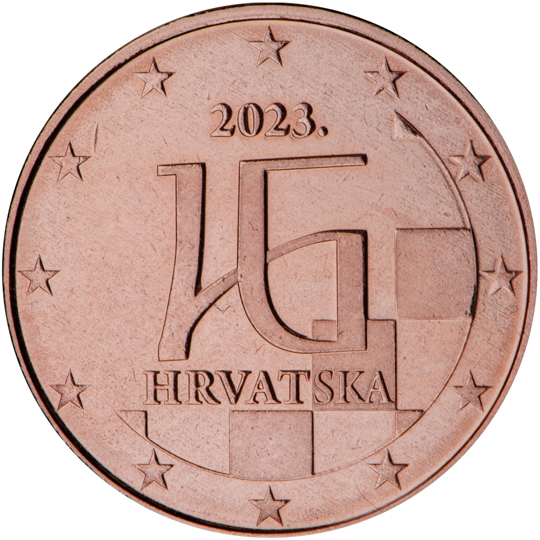
Croatia
Croatia has chosen four designs for their national sides of the euro coins, all featuring the distinctive Croatian chequerboard pattern in the background. All the coins also depict the 12 stars of the European flag.
The 5-cent coin shows a motif of the letters “HR” in the angular Glagolitic script. The Glagolitic alphabet is the oldest known Slavic script and was used in Croatia until the 19th century. The coin was designed by Maja Škripelj and includes the year of issuance and the inscription “HRVATSKA”, the country’s name in Croatian.Croatia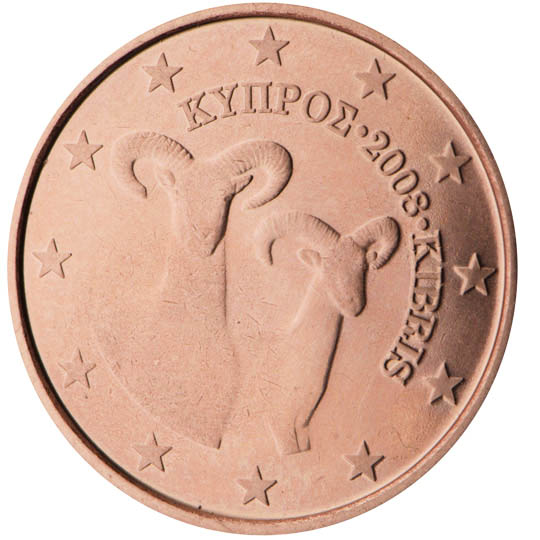
Cyprus
The 1, 2 and 5-cent coins show the moufflon, a species of wild sheep found on Cyprus and representative of the island's wildlife.
Cyprus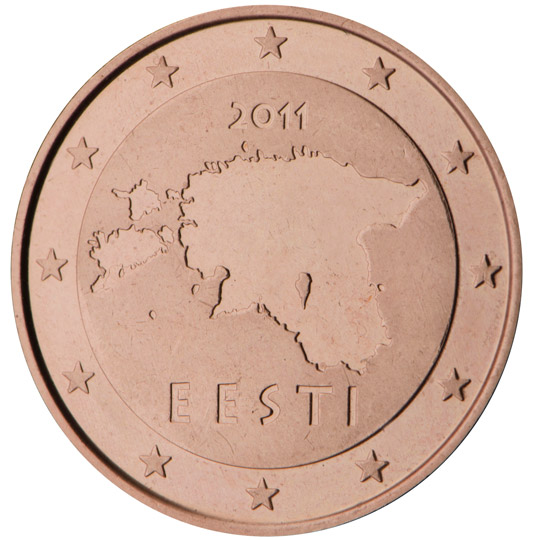
Estonia
The design for the national side of Estonia’s coins is the same for all denominations. It features a geographical image of Estonia and the word "Eesti", which means "Estonia".
Estonia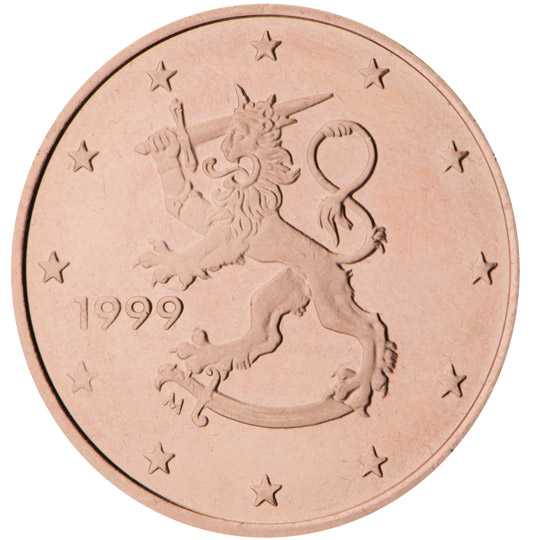
Finland
Finland chose three designs based upon motifs similar to those used before on national coins. 1, 2, 5, 10, 20 and 50-cent coins: these show the Finnish heraldic lion in a reproduction of a design by the sculptor Heikki Häiväoja. The heraldic lion in a variety of designs has been used on several Finnish coins over the years, for example on the 1 markka coins between 1964 and 2001.
Finland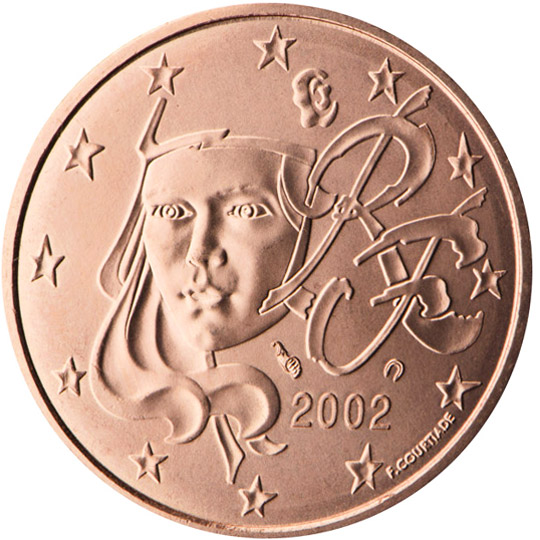
France
Over 1,200 designs were considered for the national side of the first series of French euro coins. A panel chaired by the Minister for Economic Affairs and Finance chose three designs, each for specific denominations.
1, 2 and 5-cent coins: these depict a young, feminine Marianne with determined features that embody the desire for a sound and lasting Europe. The design was the work of Fabienne Courtiade, an engraver from the Paris Mint. France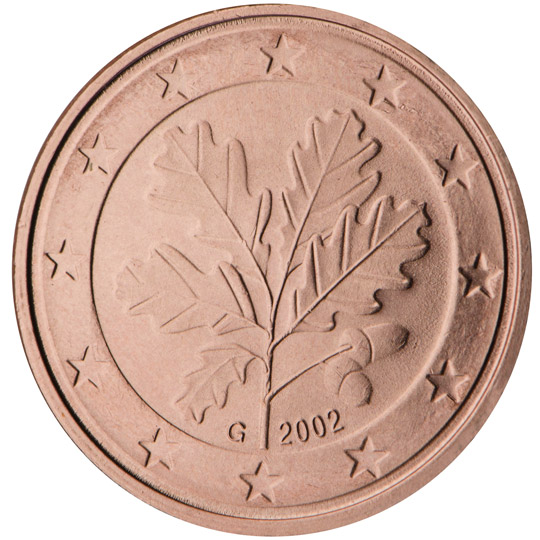
Germany
German officials and experts in numismatics chose three different designs for their euro coins. 1, 2 and 5-cent coins: the oak twig, reminiscent of that found on the former German pfennig coins, provides the motif for these coins. It was designed by Professor Rolf Lederbogen.
Germany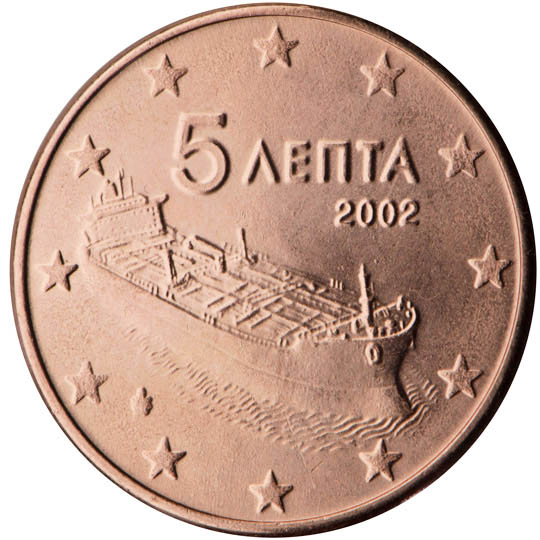
Greece
The Minister for the National Economy and the Governor of the Bank of Greece chose the designs for their euro coins from a set of proposals presented by a national technical and artistic committee. The designer of the winning motifs was sculptor Georges Stamatopoulos, sponsored by the Bank of Greece. There is a separate design for each denomination. This coin shows a modern sea-going tanker, reflecting the innovative spirit of Greek shipping.
Greece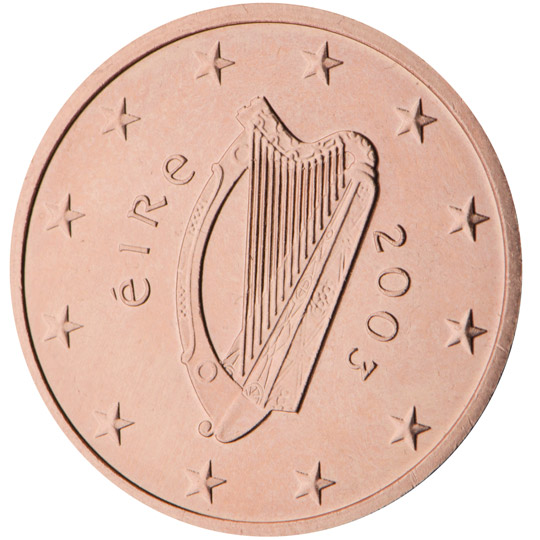
Ireland
The Government of Ireland decided on a single national design for all Irish coin denominations. They show the Celtic harp, a traditional symbol of Ireland, decorated with the year of issue and the inscription "Éire" − the Irish word for Ireland. The harp shown was designed by Jarlath Hayes.
Ireland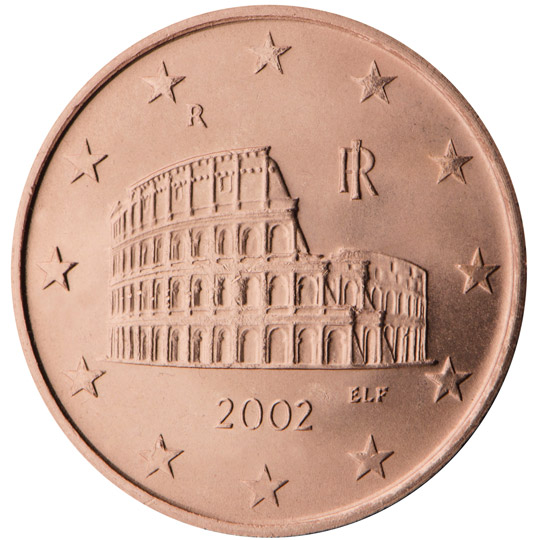
Italy
In Italy, the euro coin designs were subject to scrutiny by a national technical and artistic committee before being presented to the nation on RAI UNO, Italy's largest national television station. A different design has been selected for each denomination, chosen from masterpieces by Italy's famous artists. This design features the Flavius amphitheatre, which Emperor Vespasian began building around 75 AD and Emperor Titus inaugurated in 80 AD.
Italy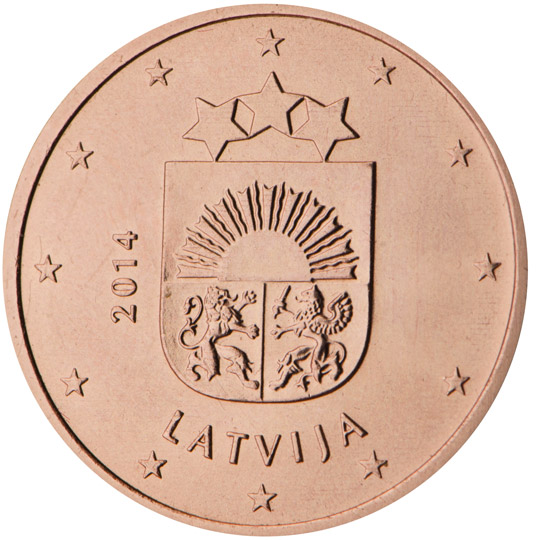
Latvia
The 5 cent coin shows the small coat of arms of the Republic of Latvia. The designer is Laimonis Šēnbergs.
Latvia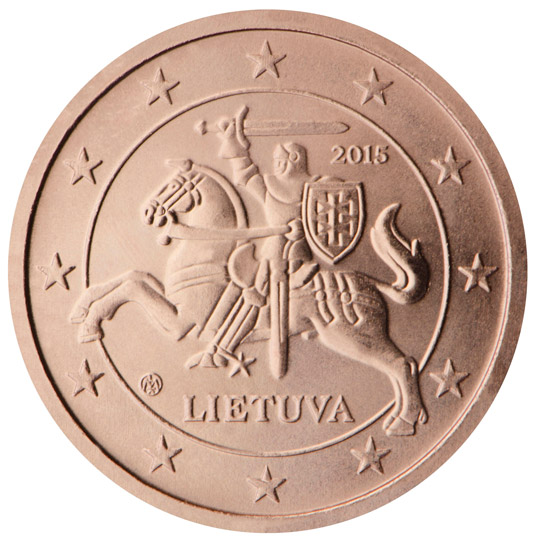
Lithuania
Lithuania’s euro coins show the coat of arms of the Republic of Lithuania, Vytis, the country of issuance "LIETUVA" and the year of issuance "2015". The coins also feature the 12 stars of the European flag. They were designed by the sculptor Antanas Žukauskas.
Lithuania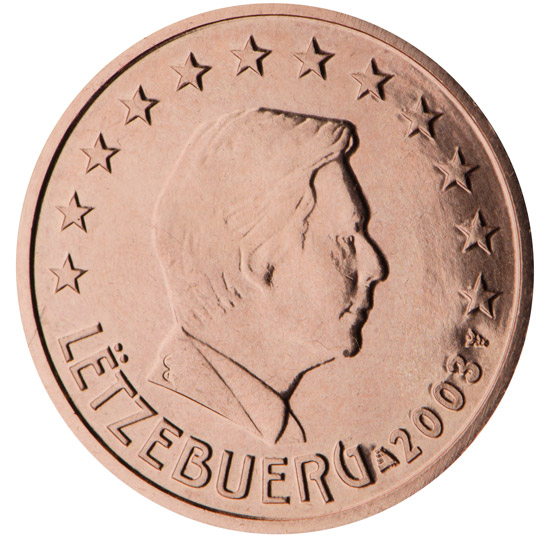
Luxembourg
Yvette Gastauer-Claire designed the coins by agreement with the Royal Household and the Luxembourg Government.
All the Luxembourg coins bear the profile of His Royal Highness Grand Duke Henri. They also bear the year of issue and the word "Luxembourg" written in Luxembourgish ("Lëtzebuerg").
Luxembourg
Malta
The 1, 2 and 5-cent coins depict the altar at the prehistoric temple complex of Mnajdra, built around 3600 BC on a low elevation overlooking the sea.
Malta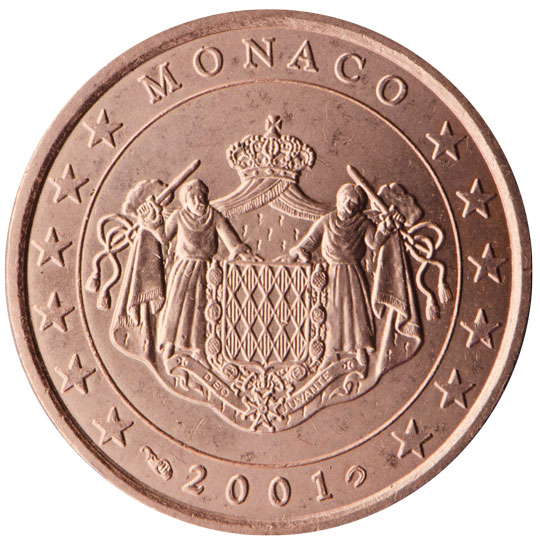
Monaco
There are two series of coins in circulation.
The first series depicts, on the €2 coin, HSH Prince Rainier III. A double portrait of HSH Prince Rainier III and HSH Hereditary Prince Albert appears on the €1 coin. The 10, 20 and 50-cent coins depict the Prince’s seal. The coat of arms of the Sovereign Princes of Monaco is shown on the 1, 2 and 5-cent coins.
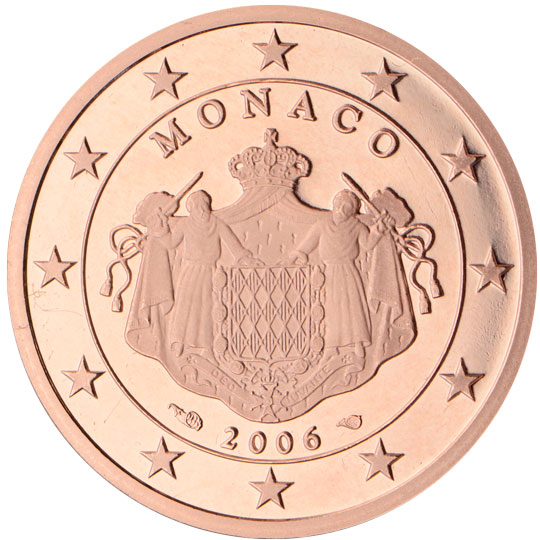
The second series shows, on the €2 and €1 coins, a portrait of HSH Prince Albert II. HSH Prince Albert’s monogram is depicted on the 10, 20 and 50-cent coins. The coat of arms of the Sovereign Princes of Monaco is the main feature of the design on the 1, 2 and 5-cent coins.
Monaco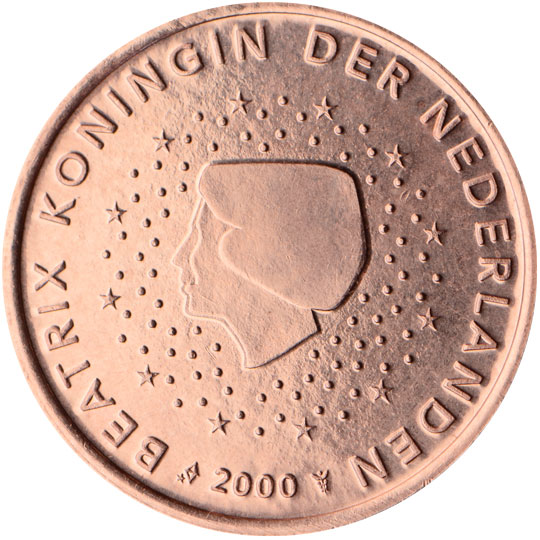
Netherlands
The Netherlands chose two designs by Bruno Ninaber van Eyben, showing Queen Beatrix, for the first series. There are two series of coins in circulation. Both are valid.
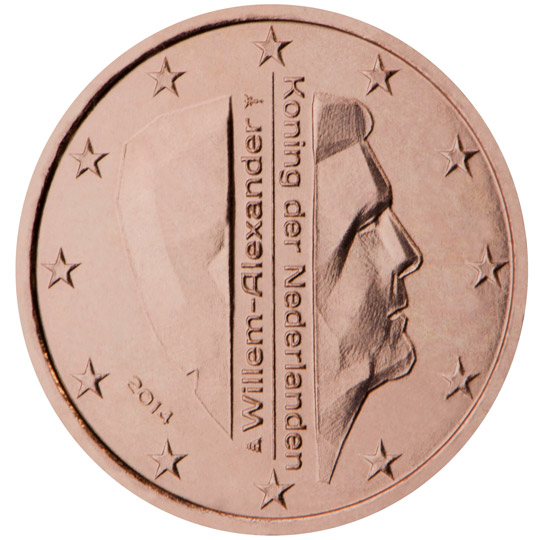
The second series, introduced in 2014, shows King Willem-Alexander and bears the inscription "Willem-Alexander Koning der Nederlanden" (King of the Netherlands).1, 2, 5, 10, 20 and 50-cent coins:
First series: Queen Beatrix is shown encircled by the inscription "Beatrix Koningin der Nederlanden" (Queen of the Netherlands).
Second series: Superimposed on an effigy of the King Willem-Alexander are the words "Willem-Alexander Koning der Nederlanden" (King of the Netherlands). The mint marks appear on either side of the name.
Netherlands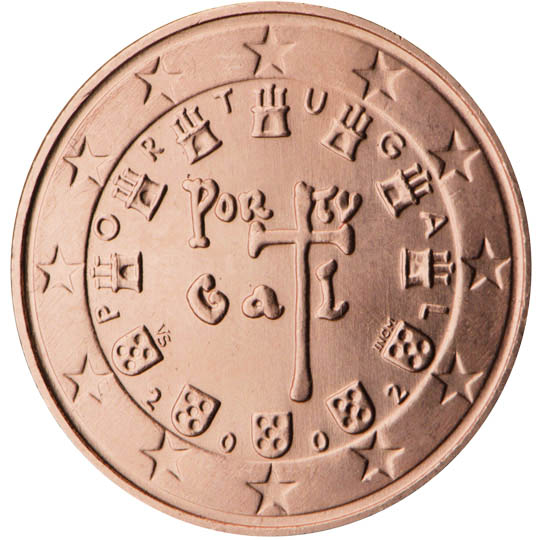
Portugal
Three different euro designs were chosen from entries to a national competition. Designer Vítor Manuel Fernandes dos Santos, who drew his inspiration from historical symbols and the seals of the first King of Portugal, Dom Afonso Henriques, won the competition with the following motifs: 1, 2 and 5-cent coins: these bear the image of the first royal seal, from 1134, along with the inscription "Portugal".
Portugal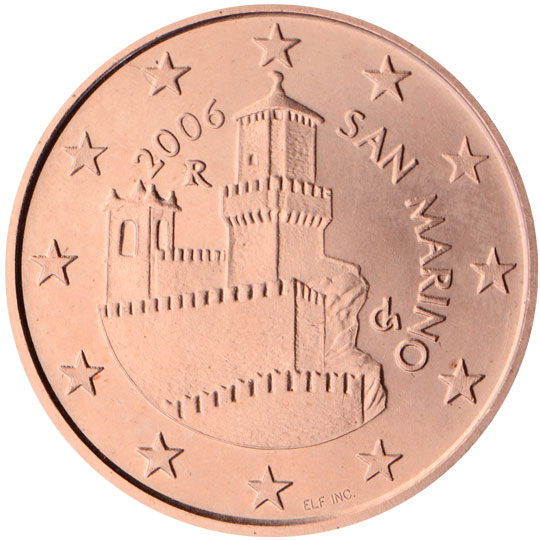
San Marino
First series: The 1, 2 and 5-cent coins show the Third Tower (Montale), the Statue of Liberty and the First Tower (Guaita) respectively.
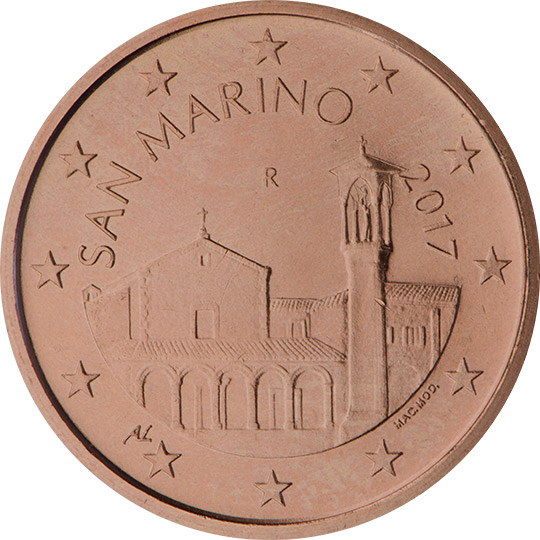
Second series: The 1, 2 and 5-cent coins show the official coat of arms of the Republic of San Marino, the City Gate and the Church of St Quirinus, respectively.
San Marino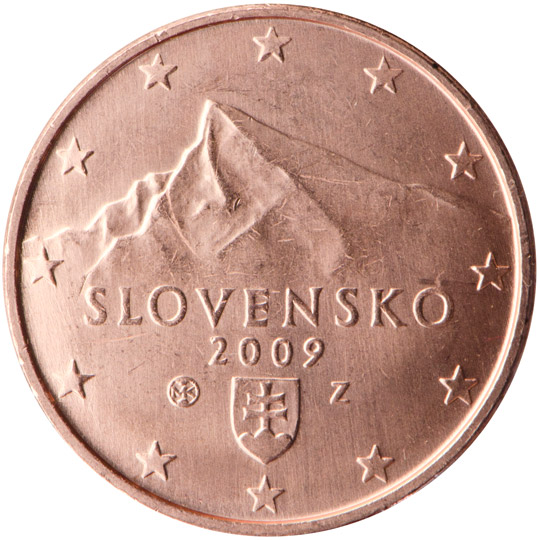
Slovakia
The 1, 2 and 5 cent coins feature the Tatra Mountains’ peak, Kriváň, a symbol of the sovereignty of the Slovak nation, and the national emblem of Slovakia.
Slovakia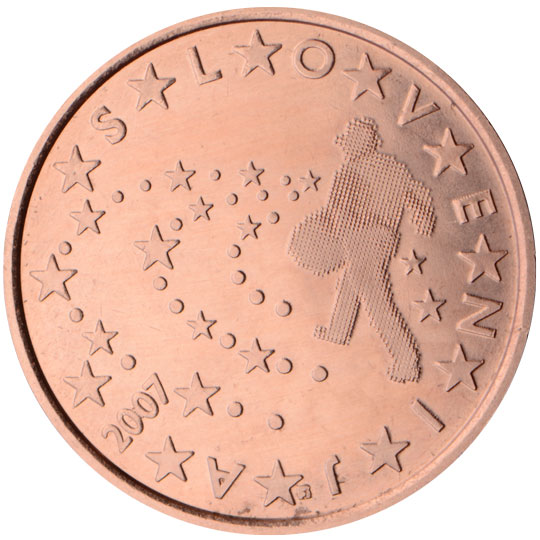
Spain
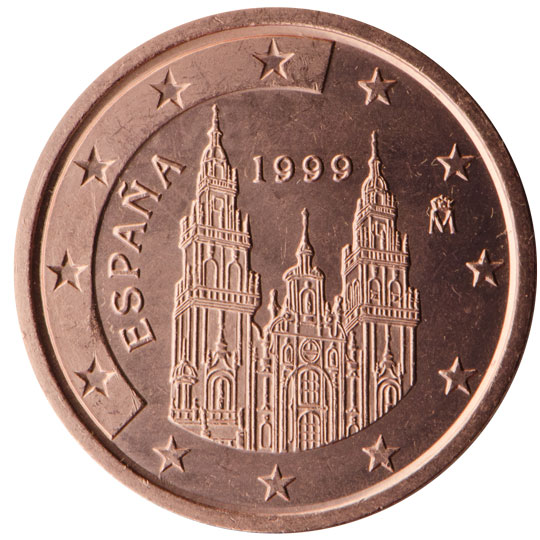
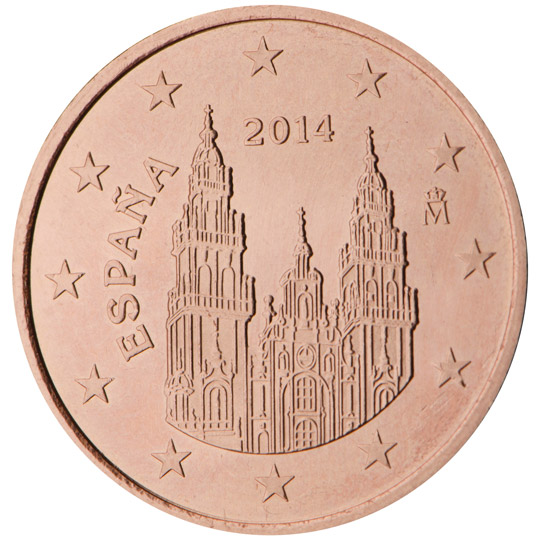
Spain’s coins feature three designs with effigies of the King, Miguel de Cervantes and the cathedral of Santiago de Compostela. There are three series of coins in circulation. All are valid.
For the second series, the coins were slightly redesigned in 2010 in order to comply with the common guidelines issued by the European Commission. The year, for instance, is inscribed on the inner part of the coin.
1, 2 and 5-cent coins: the cathedral of Santiago de Compostela, a jewel of Spanish Romanesque architecture and one of the most famous pilgrimage destinations in the world, is pictured on these coins. They show the monumental facade of the Obradoiro, a splendid example of Spanish baroque construction, started in 1667 by Jose del Toro and Domingo de Andrade. It was finished in the 18th century by Fernando Casas y Novoa. Spain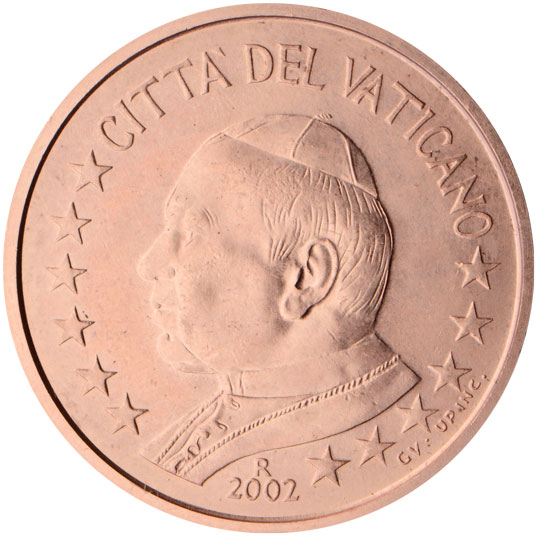
Vatican City
There are five series of Vatican City coins in circulation. All are valid.
The first series, showing Pope John Paul II, was issued between 2002 and 2005.
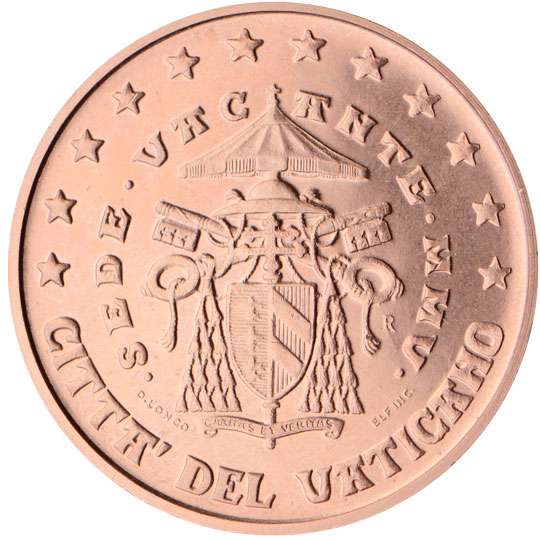
The second series, issued between June 2005 and March 2006, shows the coat of arms of the Cardinal Chamberlain, the acting head of state of the Vatican City, superimposed on the emblem of the Apostolic Chamber in the centre of the coin. The upper part of this design is surrounded by the semicircular words "SEDE VACANTE" and the year of issue in Roman numerals, i.e. "MMV". The designer's name, "D. LONGO", appears on the lower left-hand edge of the central design, while the respective engraver's initials appear on the lower right-hand edge, namely "MAC inc" (on the 1 and 20 cent coins), "LDS inc" (on the 2 and 50 cent coins), "ELF inc" (on the 5 cent and €1 coins) and "MCC inc" (on the 10 cent and €2 coins).
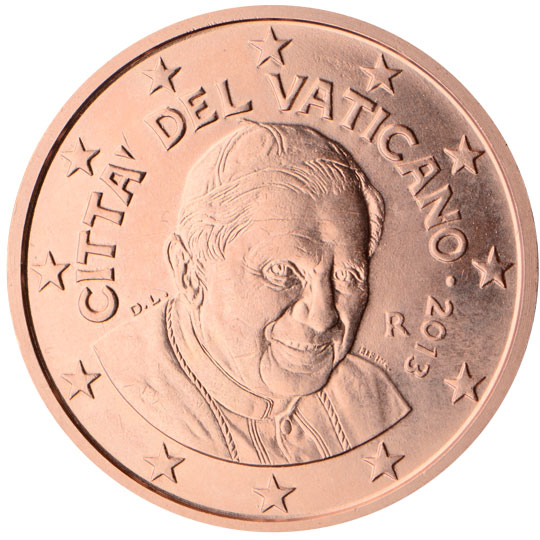
The third series, issued between April 2006 and December 2013, shows Pope Benedict XVI. To the left are the designer’s initials ("DL").
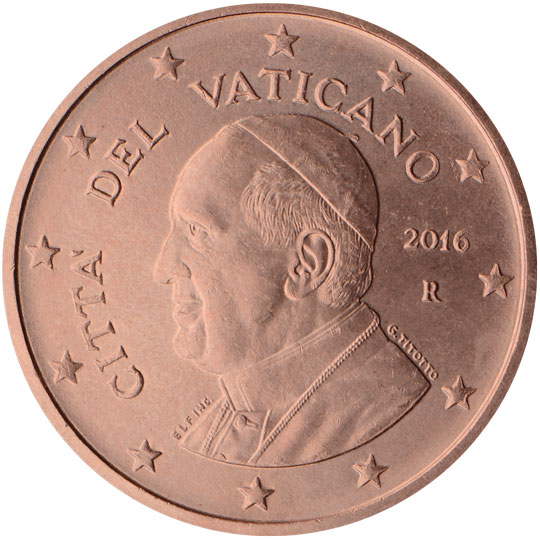
The fourth series, first issued in January 2014, shows Pope Francis.
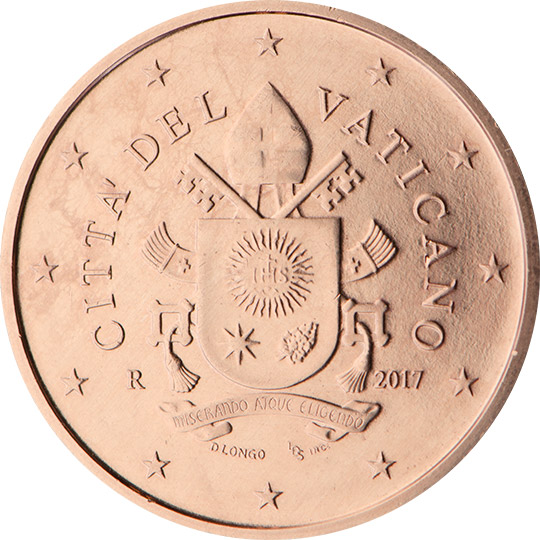
The fifth series, first issued in March 2017, shows the coat of arms of the Sovereign of the Vatican City State, Pope Francis.
The coins in each series feature the 12 stars of the European flag, the words "CITTÀ DEL VATICANO", the year of issuance and the mintmark "R".
Vatican City